01
3D Scanning
Accurate geometry capture of selected spare parts to create controlled engineering inputs.
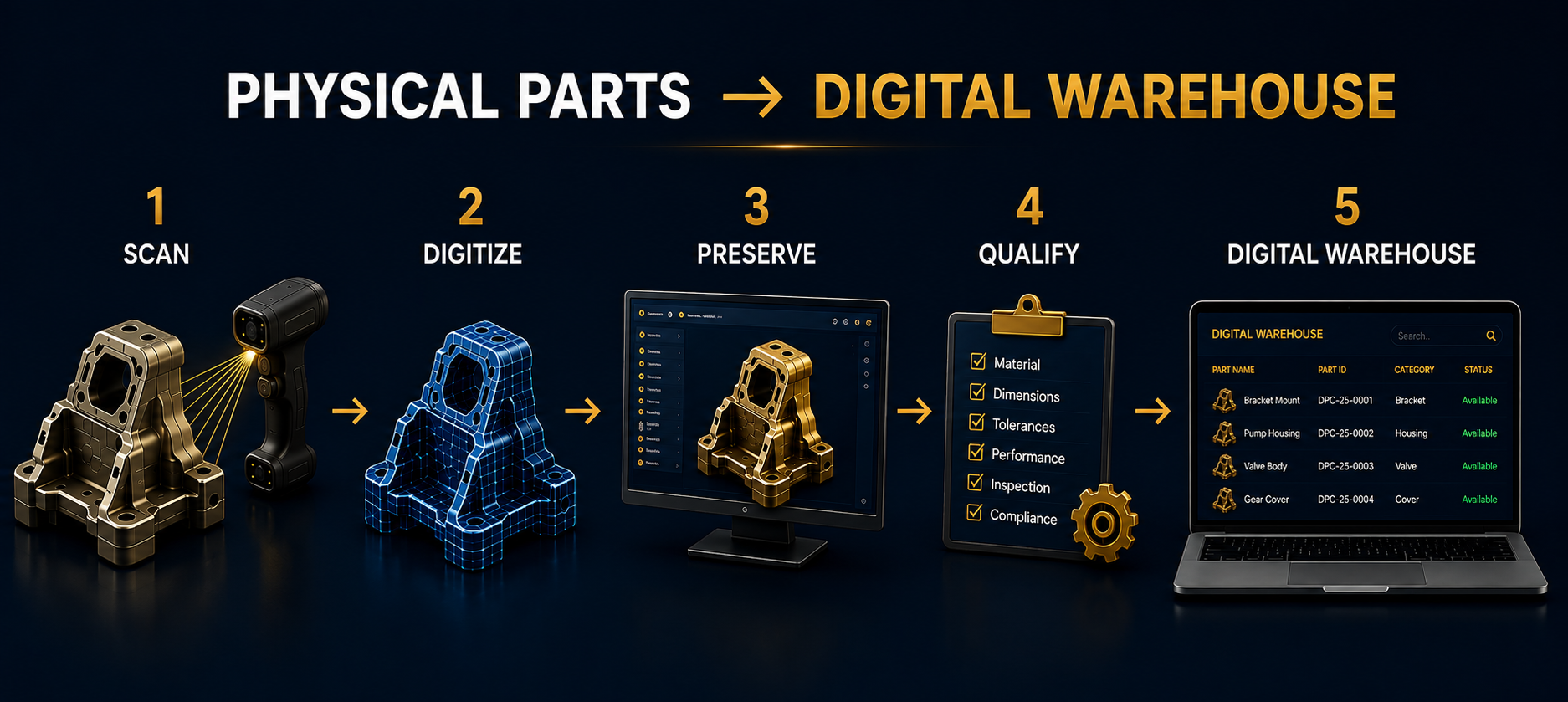
DPC digitizes selected warehouse parts through 3D scanning and controlled reverse engineering. Approved components are managed in Digital Part Passports within a secure Digital Warehouse, with validation, qualification, and manufacturing readiness applied when required.
Controlled workflow from selected physical parts to Digital Part Passports and secure Digital Warehouse records, with qualification progression when required.
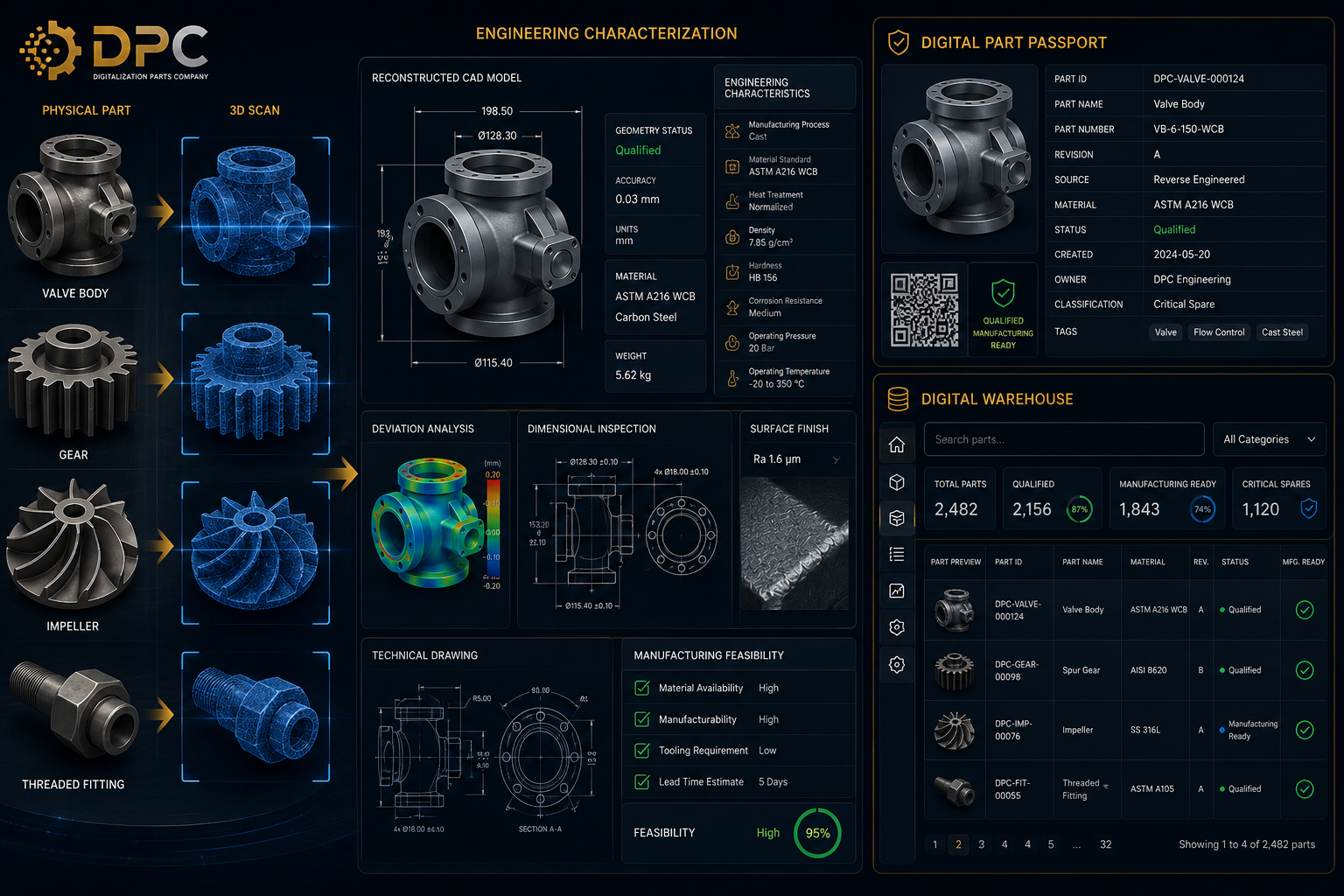
From selection to governed digital release.
High-impact parts first.
Accurate digital geometry.
Material, fit, suitability.
Evidence-gated readiness.
Controlled digital publication.
Digital Part Passport
Each Digital Part Passport is a controlled record for a selected spare part, bringing technical definition, current status, qualification evidence, and revision history into one secure source of truth for traceable decisions.
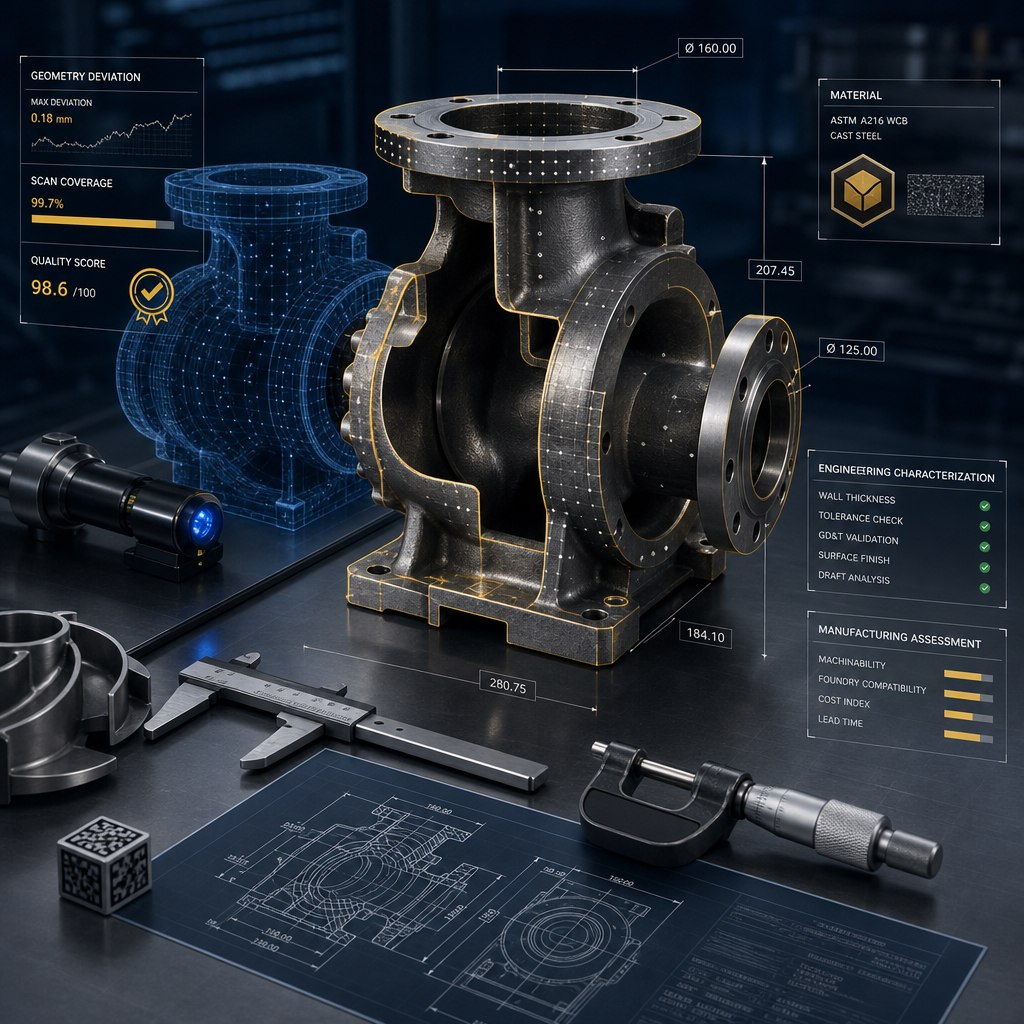
3D Scanning
Capture photos, scan data, and mesh files for selected spare parts as Captured records.
Reverse Engineering
Develop controlled CAD/STEP, drawings, materials, and critical dimensions and tolerances for Reverse Engineered records.
Digital Warehouse
Track Engineering Assessed, Qualified, and Manufacturing Ready status with governed revisions and supporting documents.
Services
We convert selected spare parts into controlled digital assets through precision capture, engineering definition, and secure qualification-ready management.
01
Accurate geometry capture of selected spare parts to create controlled engineering inputs.
02
CAD reconstruction with critical dimensions and tolerances for a controlled engineering baseline.
03
Define materials and operating requirements, then govern each part in a lifecycle-controlled Digital Part Passport.
04
Securely manage revision-controlled parts and assess suitable components for manufacturing validation and qualification.
PILOT OPTIONS
A concise comparison of Capture, Engineering, and Qualified pathways for selected spare parts.
Secure digital capture of the physical part.
Recommended
Reverse-engineered technical record for controlled decision-making.
Qualification-focused package for future manufacturing readiness.
Business exposure & operational impact
Physical-only inventory ties up capital, increases obsolescence risk, and creates delays when critical parts are unavailable.
20–30%
Reduce unnecessary physical stock exposure.
15–25%
Preserve selected parts before they become difficult to source.
22%
Move suitable low-use parts toward controlled digital inventory.
Up to 42%
Improve sourcing readiness with controlled engineering records.
Protect engineering information before it is lost.
Keep controlled digital definitions ready when needed.
Balance physical stock with suitable digital inventory.
Keep CAD, materials, revisions, and inspection records together.
DPC helps companies move from physical-only inventory to controlled digital readiness.
Review the WorkflowEnterprise FAQ
Every part moves through a defined qualification flow: scan quality checks, reverse-engineering review, engineering validation, and manufacturing-path verification. Only parts with complete evidence are released as qualified digital assets.
We typically begin with parts that create the most operational pressure: high downtime impact, long lead times, obsolescence exposure, and repeat usage. That gives fast business value and a solid baseline for wider rollout.
Access is controlled through permissioned roles, governed release steps, and full audit history. You keep ownership and control over who can view, approve, and authorize use of engineering files and related part records.
AI screening helps rank and triage parts by factors like criticality, complexity, urgency, and manufacturability path. It accelerates prioritization and planning, while final engineering and business decisions remain with your team.
Readiness is set from qualification evidence across geometry, tolerances, material, and process compatibility. Each part is clearly marked as Ready, Conditionally Ready (with required actions), or Not Yet Ready.
A pilot delivers a scoped set of qualified digital parts, Digital Part Passports, readiness outcomes, and a practical impact summary tied to lead time, downtime risk, and scale-up priorities.
The fastest path to measurable results is a scoped pilot with agreed technical and business success criteria.
Request a Pilot ProjectFinal decision point
Select 3–5 critical parts and let DPC define the controlled digitization path, qualification evidence, and delivery plan.
Request a Pilot ProjectOne focused pilot validates value before wider investment.